expr:class='"loading" + data:blog.mobileClass'>

Friday, March 30, 2018

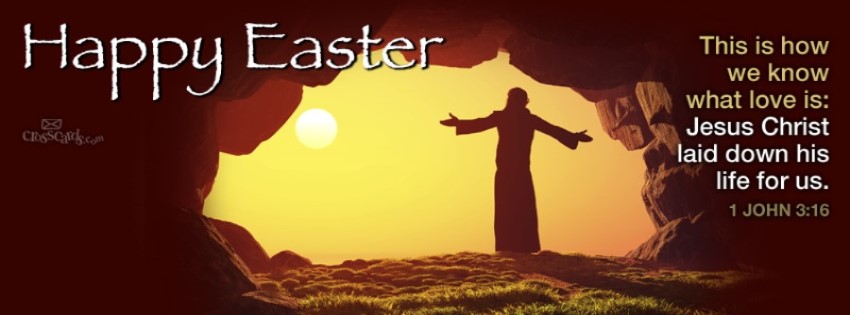
Easter 2018 by Jim Bacik

Related image

For those who do not have the opportunity of reading Father Jim Bacik's meditations, I took the liberty of sharing his Easter Mediation (2018). May the liberating power of Easter be with you.

Sunday Meditation


Easter Sunday     B Cycle   April 1, 2018

James J. Bacik

Reading: 1 Corinthians 5: 6b-8   (optional)

On this great feast of Easter, the most important liturgical celebration of the year, the epistle interprets the resurrection of Christ from the perspective of the Exodus event commemorated at the Jewish Passover meal. By the time of Jesus, the Jews celebrated their liberation from bondage in Egypt with a sacred meal that included unleavened bread and roasted lamb. As part of the Passover celebration, pious Jews disposed of the old bread leavened by yeast, which they considered sinister and corrupting, and baked new unleavened bread, symbolizing a new purified life. The roasted lamb reminded them of the Exodus when God commanded the Israelite families in Egypt to slaughter a lamb, sprinkle the blood on their doorposts, roast the lamb and eat it in haste, ready to depart Egypt (Ex 12: 1-30).

Drawing on this symbolism, Paul instructs us: "Clear out the old yeast, so that you may become a fresh batch of dough." Since Christ, our paschal lamb, has been sacrificed, we should celebrate, not with the old yeast of "malice and wickedness," but with the "unleavened bread of sincerity and truth."

By linking Easter and the Exodus, the epistle invites reflection on the liberating power of the paschal mystery, the death and resurrection of Christ. In Luke's Gospel, Jesus began his public ministry by presenting himself as a liberator who will free the captives and preach the good news to the poor. In his personal interactions, he freed individuals from their fears, guilt and isolation. He healed lepers confined to the outskirts, freeing them to return to their families and friends. He liberated women from their social isolation and included them in his preaching and mission. His preaching called for forgiveness and reconciliation that breaks the cycle of violence and recrimination. Through his death and resurrection, Christ extended his liberating power to all people, in all times and all places.

By liberating us from all that enslaves us, Christ freed us for personal growth, for serving others, for contributing to society, for promoting the common good, and for extending the reign of God in this world.

Easter is a joyous feast because it proclaims the ultimate defeat of all the forces that impede, limit and confine the human spirit and celebrates the final triumph of Christ's liberating grace, which brings us full human development. Christ, the paschal lamb, has given us a fresh start so we can put aside the enslaving patterns of the past and enjoy the new life of authentic freedom.

We can imagine people who can benefit from this liberating message: the married woman who still feels guilty over a teenage abortion; the collegian who is struggling to escape the drug culture; the executive who is caught up in the whirlwind of frenetic activity; the social worker who is overwhelmed by an excessive case load; the citizen fighting cynicism over partisan polarization; the parishioner who feels unfairly constrained by the pastor and his staff; and the pastor who feels burdened by administrative responsibilities. Human existence is inevitably limited and constrained, which means the Resurrection, with its liberating power, is good news for everyone, including ourselves.

In what specific way can the Easter celebration be liberating for me?
  

Sunday, August 20, 2017

Kaepernick is not the Problem


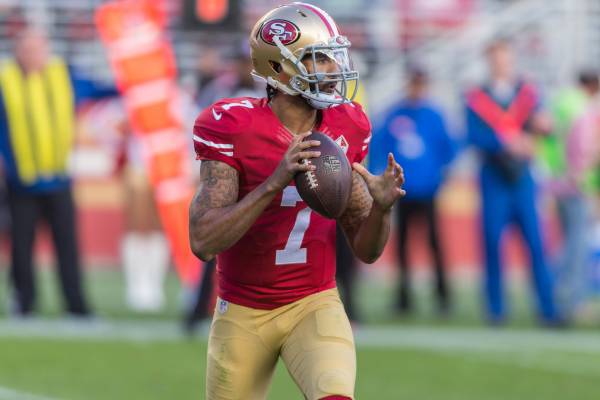
At a time when many NFL football teams need a quarterback, Colin Kaeprnick, a proven NFL quarterback, is unemployed.

 crop_exact_full_image.jpeg (600×400)

 Is it that Colin Kaeprnick, a once revered NFL quarterback, refused to stand for the National Anthem as a protest against police brutality, and racist police profiling.? Is the league sending a message? Is it that the league owners fear negative backlash from fans put off by Kap's quiet and peaceful protest?

His unemployed status poses a problem, but the problem is not Colin Kaepernick. The problem is that everybody is arguing about his protest rather than discussing the the issues raised by the protest.  The press seeks everyone's opinion about his kneeling during the National Anthem; but why is the league, Roger Goodell, the owners, and the coaches not being questioned about their response to police brutality and police profiling?

The press is obsessed with the protest and the reaction to it, but ignores the issues causing the protest.

But this is not new. The establishment, when challenged, always attacks those presenting the challenge, rather than addressing the issues generating the protest. This occurred when women sought their voting rights, the unions sought to organize, blacks sought equal rights, and Americans opposed the War in in Vietnam and later in Iraq. However, in these cases, the message was always part of the story. In Kap's case, everyone has managed to avoid the message and focuses on his protest.

Whether taking a knee during the National Anthem is an appropriate protest is not the point. He is exercising his right to free speech in a peaceful manner. He is not breaking laws.

On the other hand, the NFL has a history of giving their players "a second chance" after they beat their spouses or shoot someone. What is different about Kaepernick's protest is that it calls attention to the issue of race, the issue neither the NFL nor the country wants to deal with,

Kaeprnick is not protesting against the police, he is trying to focus attention on police brutality and racism. In fact, this past weekend NYPD officers rallied in support of Kap getting a quarterback job in the NFL. (AP)

Let's face it, A football player used the huge NFL stage to remind us that racial injustice is still a glaring problem in our country. Unfortunately we have gone after the messenger and ignored the message.

The NFL owners should be hiring/or not hiring him based on his quaterback skills, not his use of free speech.


Tuesday, November 15, 2016

Our Evangelical Problem

mike_pence.jpg (1280×720)
 Mike Pence

Many have wondered how evangelical Christians could vote for Donal Trump. After all, they have spent years preaching to us that moral character was the most important factor in choosinga political candidate.  While preachers, priests, and bishops have, in defiance of the law, used their pulpits to convince congregations to vote either for a candidate or against a candidate, they  always argued that their candidate possessed a higher moral character.

And then this year, Donald Trump comes along, flaunting his lack of moral character.

One would have expected the Evangelicals would have been outraged at his past behavior and his current rhetoric. But, then an election occurred and according to the exit polls, the Evangelicals voted in greater numbers for Trump than they did Mitt Romney, John McCain, or George Bush. (They are a minority of 28% within the minority party, but they posesses disproportinate power because the GOP needs them to win.)

So what happened? How did they manage to ignore  Trump's many lies, his sexual ethics, his lack of interest in religion, his attitude toward women, his assault on the Eight Beatitudes, and his attacks on a religious minority? Apparently, they weren't really serious about about moral character; they were only interested in a few issues: criminalizing abortion, restricting LGBT rights, and reversing access to gay marriage. If Lucifer himself promised to promote their pet issues, they would have voted for him.

Technically, they should not care about any of these issues. No one is forcing them to have an abortion, no one is forcing them to have dinner with a transgender, no one is forcing them to marry a member of their own sex.

What it's all about is that evangelical Christians want to impose their beliefs on the rest of country. They want their religious beliefs and moral code to become the law of the land.

Fortunately, our Founding Fathers foresaw such a danger. Thus, in their wisdom, they gave us the First Amendment which, as Thomas Jefferson pointed out, builds a wall between church and state. And, of course, they seem to have conveniently forgotten that George Washington wrote: "The government of the United States is not, in any sense, founded on the Christian religion."

This obsession with imposing their religion and moral code on the rest of us is extremely dangerous in a constitutional democracy. Just as they fear a government based on Sharia Law, others rightfully fear a government based on the beliefs of the evangelicals.

In the 2016 Presidential election, a man of dubious Christian pedigree changes his mind on abortion and says all the things the Evangelicals want to hear. Then he chooses Mike Pence, the poster boy for the Evangelicals, as a running mate, and they flock to the Trump tent.

Of course, it is quite possible that a politician sincerely can change his mind on an issue, but Mr. Trump's change seems to be pandering, and it apparently worked. And now he is obligated to fulfill his promise to the people who want to break down the wall between Church and State. (Most recently, Mr. Trump has backtracked on the gay marriage issue.)

The hope for our nation is that our judiciary has the integrity to prevent one religious group from imposing their beliefs on the rest of their fellow citizens.

1211cwrchurchan_00000000703.jpg (575×300)

Sunday, November 13, 2016

The Country is Pissed Off, Pre and Post


election-protests-california.jpg (620×413)

Unhappy and worried Americans take to the streets exercising the rights of free speech  and t peaceful assembly. Others try to create violence within such a setting. Some Americans, consumed by hate, now feel free to harass, insult, torment, and even assault other Americans because of the shade of their skin.

All of this blatant hatred in a constitutional democracy as the result of a presidential election, in spite of President Obama's effort to make the transfer of power peaceful and smooth. The bottom line is Americans are pissed off. (Forgive the vulgarity, but after the language we were subjected to during the political campaign, my usage seems mild.)

The Clinton supporters are angry because their candidate, in spite of winning the three debates, leading in the polls, and winning the popular vote, lost the election.  They are outraged that the FBI inserted itself into the final stage of the campaign and  believe that the media was manipulated. They are also convinced that Vladimir Putin and the Russians took an unholy interest in the election, and disgusted that the winning candidate made statements threatening to many.

Prior to victory, the Trump supporters were angry with the status quo:  government, politicians, bureaucracy, social programs, lack of jobs, international trade deals, factory closings, Wall Street, and innumerable real and perceived injustices.  In many cases, this anger was fueled by fear, fear of  the other: immigrants, people of color, and especially Muslims.

After the surprising results of the election, the pundits on both sides tried to explain the results. The Republicans were quick to say: "The people who voted for Trump, although they may not have liked his character,  were voting for the conservative agenda." The Democrats were scratching their heads and asking themselves why Americans would vote for a sexist and racist.

There has been much analysis as to what the election means. Did Hillary lose it? Did Trump win it? Why didn't the Democrats go to the polls as they did in 2012? Since it was so close, did the 3rd party candidates flip it?

But the most important question is: if a sexist and racist candidate receives a majority of the electoral vote, does that mean those voters are also openly or secretly sexists and racists? I would hate to think that is the case. Granted some voters fit into that category (you know who you are)abolish, I hope that many who voted for him did so in spite of his sexism and racism,

And in the final analysis, it's not that difficult. The country is pissed off. The Trump voters saw Hillary as the same old boring vanilla and wanted a new more exotic flavor. The untried outsider has more appeal than the perceived insider.

So, Mr. Trump's problem is that after he and the Republicans build walls, expel Latinos, force Muslims to register (as of the present, they will not have to wear a crescent moon and star on their coats), abolish Medicare, build more pipelines, cancel citizens' health insurance, privatize National Parks, reduce taxes on the wealthy, cancel trade deals, renege on the Paris Accord, initiate a trade war with Chins, sabotage the Iranian Nuclear Agreement, and possibly withdraw from NATO. the country will still be pissed off - now, for other reasons.

Change simply for the sake of change does not work.


Sunday, October 16, 2016

"Political Correctness" Is Not All Bad


63967512.jpg (400×400)


Labeling something as "politically correct" appears to be a popular conservative put-down of almost any opinion contrary to their own. In their lexicon, if one is "politically correct," she/he is soft, weak or fearful of calling "a spade a spade"(pun intended).

Donald Trump has said: "I don't have time for political correctness."  Many have argued that political correctness is the "tyranny of manners," and others say it muzzles free speech.

In light of the rhetoric surrounding this year's presidential elections, I would like to make a case for discerning speech, i.e, what is frequently disparaged as "political correctness."

First, I am not advocating that "political correctness" should interfere with someone's free speech, but I am suggesting that the manner in which one expresses their thoughts should be within the constraints of civility. I think any serious adult can make their point without using words like homo, bitch, or retard, especially if these terms are directed at another person. These terms are even unacceptable on junior high playgrounds.

Referring to women or their body parts with the p-word or the c-word is beyond the realm of common decency and should not be tolerated. Using the f-word or n-word is wrong for many reasons other than an issue of "political correctness."

usa-election_debate2.jpg (664×441)
However, the term, "political correctness, " is in itself a caricature promoted by those who wallow in racist, sexist, and xenophobic diatribes. What is at issue is not political at all; it is about common decency and civility -- two values that have been thrown under the bus in 2016. In the most recent "town hall" debate, even the body language exhibited disturbing signs of inappropriate stalking. Who would have considered a candidate from a major political party would graphically boast about sexual assault?

The 2016 presidential election cycle is unique in many ways; and although it may influence future campaigns, I hope that the lack of civility will be proven to be an unacceptable tactic.

I long for the days of cultured conservatives like William F. Buckley who could attack an opponent without resorting to vulgarity and name-calling. "I would take you seriously, but to do so would affront my intelligence."


Sunday, October 2, 2016

Trump Sees US as a Third World Country

Image result for 3rd world country
Trump doesn't know what a 3rd World Country is.


In his first presidential debate with Hillary Clinton, Donald Trump said: "We are a third world country."

Such a comment is not surprising from a candidate who continually disparages our country. His campaign to "Make America Great Again," suggests that America is not great, and that we should go back to the way things were in the past.  The question then becomes: Where does he want to go back to?  The days of slavery? The days women were not allowed to vote?  World War Two? Bush's war in Iraq/?  Bush's Great Recession? The economic good times of Bill Clinton's Administration?

If we are a third world country now, what were we before Barack Obama became President -- a time we were facing another Great Depression?


And how would Donald Trump even know what a third world country is? Granted he flies all over the world in his private jets, but he never visits the impoverished countries of Africa. Why would he go there? They have no money. Donald Trump does not know what a third world country really is. He avoids countries that have no plush hotels and golf courses. He does not want to be near poverty and disease. Thus, he is hardly the one to tell us we are a third world country.
Image result for trumps sons kill elephant

But, to be fair to Mr. Trump, he was probably speaking about the state of our infrastructure. (Of course, one never knows; he makes a career out of being unclear.) Even if he was speaking only of our infrastructure, the question remains: How would he know what a third world infrastructure is? His sons probably know a bit about third world countries since they travel the world to kill large animals.


Although our infrastructure is not that of a third world country, it is deteriorating and is in need of attention. What Donald fails to mention is that President Obama has been pushing for infrastructure improvements which would also generate new jobs, but Donald's  fellow Republicans in Congress consistently prevent any such projects. Unfortunately these GOP congress men and women have taken the position that they will prevent anything that President Obama proposes, even though all agree such proposals are for the good of the country.

It is an unfortunate day for our country when one of our major parties stymies the efforts of our President to enhance the country, and that same party's presidential candidate is trashing his own country and exalts the Russian leader, Vladimir Putin. 

Sunday, May 15, 2016

My No-Way-In-Hell Bucket List


running-of-the-bulls.jpg (640×435)

After a recent tennis match, a discussion of bucket lists evolved -- not surprisingly since all four of us will never see seventy again. As we soon discovered, none of us shared the same items. What one really wanted to do was likely to be considered a waste of valuable time by the other three. Some items were idealistic: develop a vaccine for the Zika virus; others were mundane and slightly unrealistic; score a hole-in-one.

That conversation made me realize that there are many items I would never put on a bucket list and as a result I developed the following list, "My No Way in Hell Bucket List."  Rather than accentuate the positive, I choose to concentrate on the negatives, the things I want to avoid at all costs.


  • run with the bulls at Pamplona
  • attend the Westminster Dog Show
  • go hunting with Dick Cheney
  • climb Mt. Everest
  • spend a night on Riker's Island
  • attend a Sarah Palin Family reunion
  • vacation in North Korea
  • hike the Salkantay Trail to Machu Picchu           
  • learn computer code
  • bungee jump from a bridge over a river gorge
  • play golf with Donald Trump, Ted Cruz, and Marco Rubio
  • participate in the Ididirod
  • have dinner with Marcel Marceau -- several reasons
  • attend a NASCAR or WWW event
  • participate in the "La Tomatina" in Brunoi, Spain
  • go with my friend, Hussein, to a Trump rally
  • attend a Ted Nugent concert -- hate should be free
  • watch a cricket match from beginning to end
  • get to Carnegie Hall -- I'm not into practicing
  • live in Texas -- let me count the reasons
I'm sure most readers have a "No-Way-in Hell" bucket list, even if they have not actually formalized it. For example,my wife, Sandy, would probably add: attending a rattlesnake hunt. 

Those who wish to add to this list may do so in the comments section below.